You launch a better product, ship faster than incumbents, and publish content your sales team is proud to send prospects. Yet a weaker competitor still outranks you for the terms that matter. For SaaS, that might be a high-intent comparison query. For eCommerce, it might be a category page that should be printing revenue. When that happens, the missing piece is often not product quality or even content quality. It's authority.
That's where backlinks enter the picture. If you've been asking what is a backlink, the simplest answer is this: it's a link from another website to yours. Search engines have treated those links as signals of importance for a long time, and that idea goes back to Google's early PageRank model, where a page's significance could be estimated by the number and quality of links pointing to it, as described in Wikipedia's backlink overview.
For a founder or growth lead, backlinks matter because they shape whether your site gets trusted enough to rank when buyers are searching. In software and online retail, that trust compounds. Better rankings lead to more discovery, more branded searches, more product page visits, and more opportunities for your pipeline or checkout flow to do their job.
Table of Contents
- Why Your Competitor Ranks Higher and What to Do About It
- How Backlinks and Link Equity Actually Work
- The Different Types of Backlinks Explained
- What Separates a Good Backlink from a Bad One
- How to Audit Your Backlink Profile
- The Business Impact of a Strong Backlink Profile
Why Your Competitor Ranks Higher and What to Do About It
If two companies target the same keyword and publish equally solid content, search engines still need a way to decide which page deserves the more prominent position. Backlinks help answer that question.
A backlink is a recommendation in public. One site links to another because it considers that page worth sending people to. In SEO, that recommendation becomes a trust signal. It tells search engines that other publishers, blogs, directories, or resources find your page relevant enough to cite.
For SaaS, this often shows up when a competitor earns mentions from integration partners, industry blogs, review pages, or technical resources. For eCommerce, it might come from gift guides, product roundups, media coverage, supplier pages, or niche communities. The product isn't the only thing being evaluated. The web is voting on who deserves visibility.
What that means in practice
A lot of teams misdiagnose ranking problems. They rewrite title tags, tweak product copy, and refresh blog posts, but they never solve the authority gap.
Focus on three questions first:
- Who is linking to the pages above you. Look at the specific ranking page, not just the domain homepage.
- Why those sites linked. Was it original insight, a useful tool, a product page with strong commercial intent, or a category page that became a citation target?
- Whether your page gives publishers a reason to reference it. Good content for users and linkable content for publishers aren't always the same thing.
Backlinks aren't a trick layered on top of SEO. They're one of the oldest ways search engines estimate which pages deserve attention.
That's why backlinks still sit near the center of competitive SEO. If your rivals keep winning despite having no obvious product advantage, there's a good chance they've built a stronger network of trust around the pages that make them money.
How Backlinks and Link Equity Actually Work
Think about backlinks the way buyers think about references during procurement. A recommendation from a known operator in your category carries more weight than praise from an unknown source. Search engines work similarly. They don't treat all links equally.
Google's original PageRank model treated links as votes, but the value passed by a link is diluted by the number of outbound links on the referring page. That means a backlink from a strong page with few outgoing links can carry materially more weight than one from a weak page with many links, as explained in Moz's guide to backlinks.
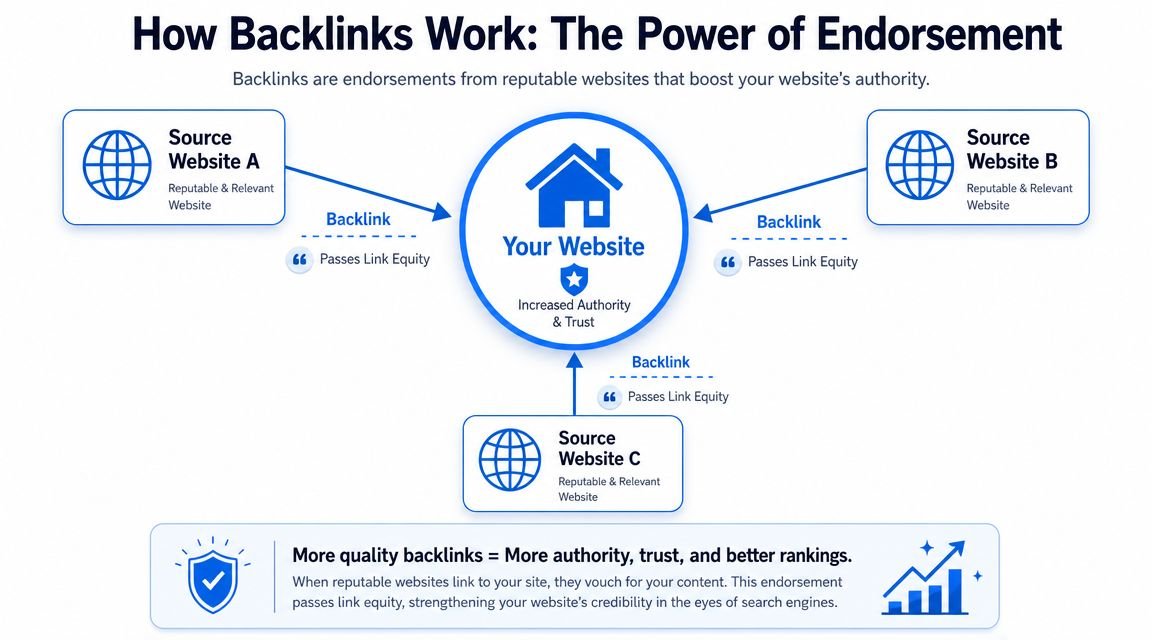
Why one great link can beat many weak ones
This is the part many founders miss. A link is not just a line of HTML. It sits inside a context.
If your accounting SaaS gets cited in a respected finance publication's guide to closing the books, that link does more than send a few referral visits. It connects your brand to a page search engines already see as useful and trustworthy. If your eCommerce store gets listed in a tightly curated buying guide for your product category, that signal is stronger than a pile of random directory links nobody reads.
A practical way to think about link equity:
- Authority matters. Trusted pages can pass more value.
- Relevance matters. A link from a page close to your topic makes more sense.
- Outbound-link density matters. A page linking to everything under the sun spreads less value per link.
If you want the deeper ranking context behind this, Google PageRank factors are worth understanding at a conceptual level.
How this affects SaaS and eCommerce strategy
For SaaS, high-value backlinks often support pages tied to demand capture. Product-led landing pages, comparison pages, integration pages, and category-defining blog content all benefit when the right sites cite them.
For eCommerce, link equity often helps category pages, collection pages, and top-of-funnel guides that feed commercial traffic downstream. Many stores make the mistake of pointing every campaign at the homepage. That's rarely the strongest path if your real revenue comes from ranking collections and product clusters.
Practical rule: Don't ask, “How many links can we get?” Ask, “Which relevant pages would make our target page look more credible?”
That question produces better campaigns, cleaner outreach, and a healthier backlink profile over time.
The Different Types of Backlinks Explained
A backlink type tells you two things: how search engines are likely to treat the link, and why that link exists in the first place. For a SaaS company or eCommerce brand, both matter. A link that helps rankings but sends zero qualified visitors has limited business value. A link that sends buyers, partners, or high-intent researchers can justify itself even if the direct SEO impact is modest.
The first distinction is dofollow versus nofollow. Dofollow links can pass link equity. Nofollow links usually do less for direct rankings, but they still play a role in discovery, brand visibility, and referral traffic.
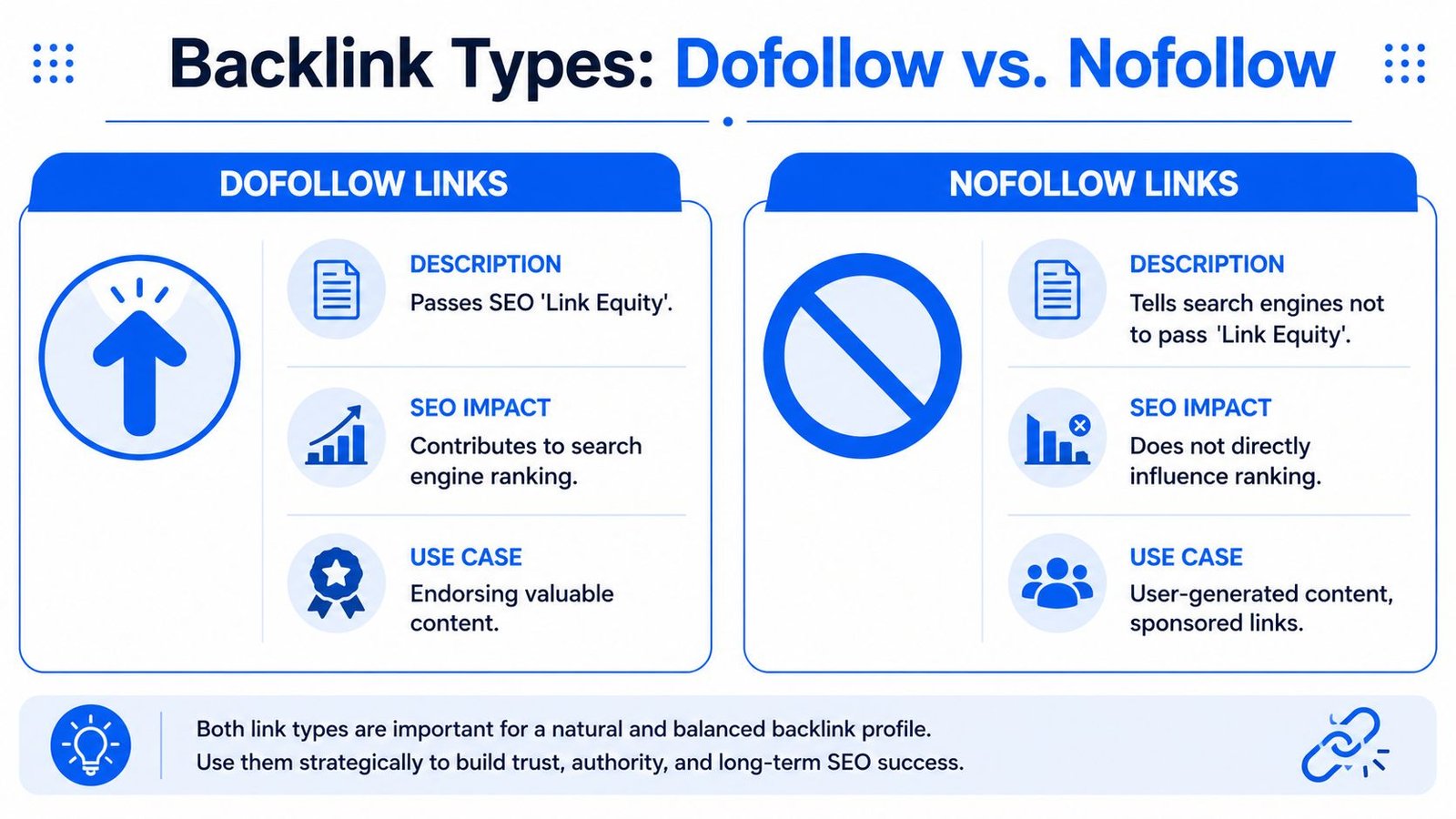
Why this distinction matters in practice
If a category page for your online store earns a dofollow mention in a respected product roundup, that can help the page compete for commercial terms. If your SaaS gets a nofollow link from a major industry publication, that may still put your product in front of evaluators, journalists, and buyers who later create stronger editorial links of their own.
Here's the practical comparison:
| Attribute | Dofollow Link | Nofollow Link |
|---|---|---|
| Passes link equity | Often yes | Usually limited |
| SEO effect | More direct ranking value | More indirect value |
| Common use | Editorial references, resource pages, citations | Sponsored placements, comments, some community platforms |
| Business upside | Helps target pages rank | Can drive awareness, clicks, and secondary link opportunities |
For a more technical explanation, see follow and nofollow links.
Treat the label as one signal, not the whole decision.
A nofollow link from a trusted site can outperform a weak dofollow link in real business terms. I would rather see a SaaS client featured on a respected publication that sends demo traffic than pick up another dofollow link on a page no one reads. The same applies to eCommerce. A mention in a shopper-facing buying guide can influence rankings later, but it can also produce revenue this quarter.
The backlink types that show up most often
Editorial links
These are the links teams usually want most. A writer, editor, or subject-matter expert chose to reference your page because it improved their content. For SaaS, this often happens with original research, integration pages, comparison content, or expert commentary. For eCommerce, it often comes from gift guides, product roundups, and category-specific recommendations.
Sponsored links
These exist because money changed hands. They can be useful for reach and brand exposure, especially if the publication influences your buyers. They are weaker as trust signals than earned editorial mentions, and they need proper handling from an SEO standpoint.
UGC links
User-generated content links appear in forums, community threads, review platforms, and comments. These rarely carry a link-building campaign on their own, but they can still matter. For SaaS, a strong mention in a niche community can drive trials. For eCommerce, a relevant forum thread can send steady referral traffic for months.
Directory links
Some directories are legitimate. Partner directories, software marketplaces, professional associations, and niche shopping directories can all make sense. Others exist only to list sites and sell placements. The difference is whether real users rely on the directory to compare options or make buying decisions.
The business test is simple. Ask why this link exists and what happens if rankings never change. If the answer is still positive, such as qualified traffic, better brand credibility, or stronger visibility in your category, the link may be worth pursuing.
Healthy backlink profiles usually include several of these types because real brands earn links from different contexts as they grow. The pattern should look commercially natural. A venture-backed SaaS will accumulate mentions from review sites, partners, communities, and media. A serious eCommerce brand will show up in guides, directories, press coverage, and product-focused content.
For SaaS, the strongest mix often includes editorial links to commercial-intent pages plus community and partner links that support brand discovery. For eCommerce, the best mix often pairs category-level editorial links with buyer-oriented mentions that influence both rankings and sales.
What Separates a Good Backlink from a Bad One
A backlink can look fine in a report and still do almost nothing for the pages that drive revenue.
That mistake shows up all the time in SaaS and eCommerce. A founder approves a placement because the site has decent-looking metrics, the link goes live, and nothing changes for signups, demos, or sales. The problem usually is not volume. It is fit.
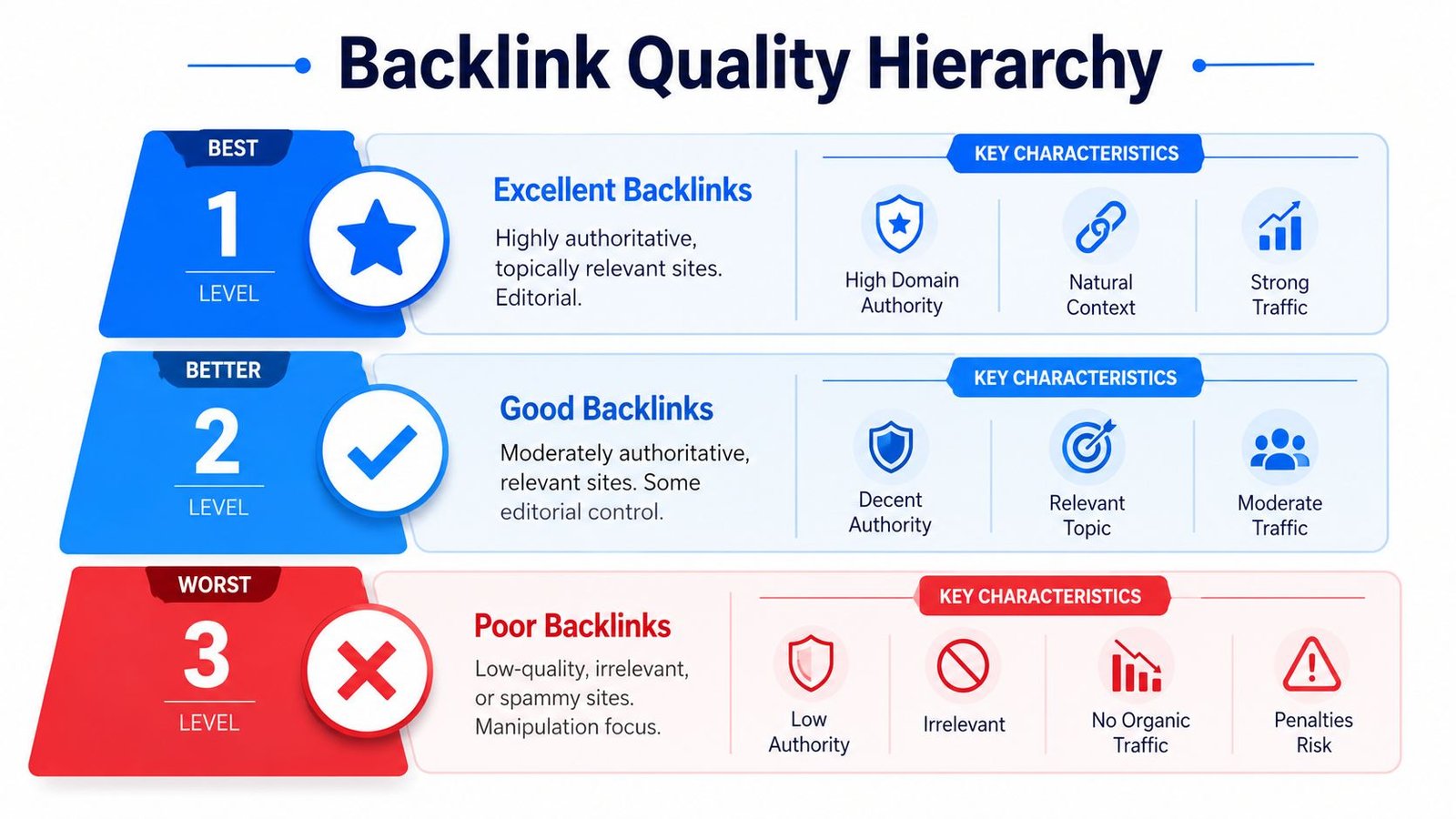
The four-part quality check
Authority of the linking domain
Authority still matters because links from trusted sites tend to pass more weight than links from neglected sites built only to host guest posts. Third-party metrics from Ahrefs, Moz, and Semrush help with comparison, but they are only a starting point. I use them to screen opportunities, then I look at the site itself. Does it publish consistently? Does it rank for relevant topics? Does it have real readers, branded search demand, or signs of editorial review?
For SaaS, a link from a respected industry publication or integration partner can support product and comparison pages that influence pipeline. For eCommerce, a link from a credible buying guide or category publisher can help collection pages compete for high-intent searches.
Topical relevance of the linking page
Relevance decides whether the link strengthens your authority in the category you want to own. A project management SaaS gains more from a link on a workflow article than from a random mention on a general lifestyle blog. A home fitness store gets more from a serious product roundup than from an unrelated business directory page.
Google is trying to understand why your site deserves visibility for a topic. Relevant links make that case clearer. Irrelevant links muddy it.
Anchor text
Anchor text should read like something an editor would naturally write. Brand anchors, product names, page titles, and plain-language descriptive phrases usually hold up well over time. Exact-match commercial anchors across a large share of links often signal manipulation, especially if they point to the same money page again and again.
For SaaS, that can mean repeatedly forcing terms like "best CRM software" into placements. For eCommerce, it often looks like every link pushing the same product keyword. Both patterns are easy to spot.
Placement on the page
Placement changes value. A link inside the main body of an article, surrounded by relevant copy, usually carries more weight than a footer link, author bio, sidebar widget, or page full of outbound links. It also tends to send better referral traffic because readers see it in context.
A simple test helps. If the SEO benefit disappeared tomorrow, would the publisher still want that link on the page because it improves the article for readers?
What bad opportunities usually look like
Weak backlinks often share the same fingerprints:
- Loose or fake relevance. The site has no real reason to cover your category, and the mention feels inserted rather than earned.
- Paid placement footprints. Articles exist mainly to host outbound links, with repetitive formatting, awkward anchors, and little original insight.
- Thin editorial standards. Content is generic, lightly edited, and written for indexing rather than for an audience that might buy.
- Low-value page placement. The link sits on a page that gets little visibility, weak internal support, or no meaningful traffic.
- Poor commercial alignment. The link points to a page that does not help rankings or conversions, so even a decent placement has limited business value.
A strong backlink profile is not just an SEO asset; it is part of customer acquisition. Good links improve your odds of ranking the pages that bring in demos, free trials, email captures, and transactions. Bad links drain budget, create noisy reports, and rarely strengthen a defensible position in search.
If you want a broader way to judge whether links support the rest of your SEO work, use a website auditing checklist for commercial pages and authority signals.
The trade-off is straightforward. Good links take more work because they require real relevance, real editorial standards, and pages worth citing. Bad links are easier to buy and easier to scale. They also tend to help the least where it counts most: revenue-driving search visibility.
How to Audit Your Backlink Profile
A backlink audit doesn't need to start with a giant spreadsheet and a week of detective work. For most SaaS and eCommerce teams, a first-pass audit is about answering three questions: who links to us, which links support money pages, and where competitors have an authority edge.
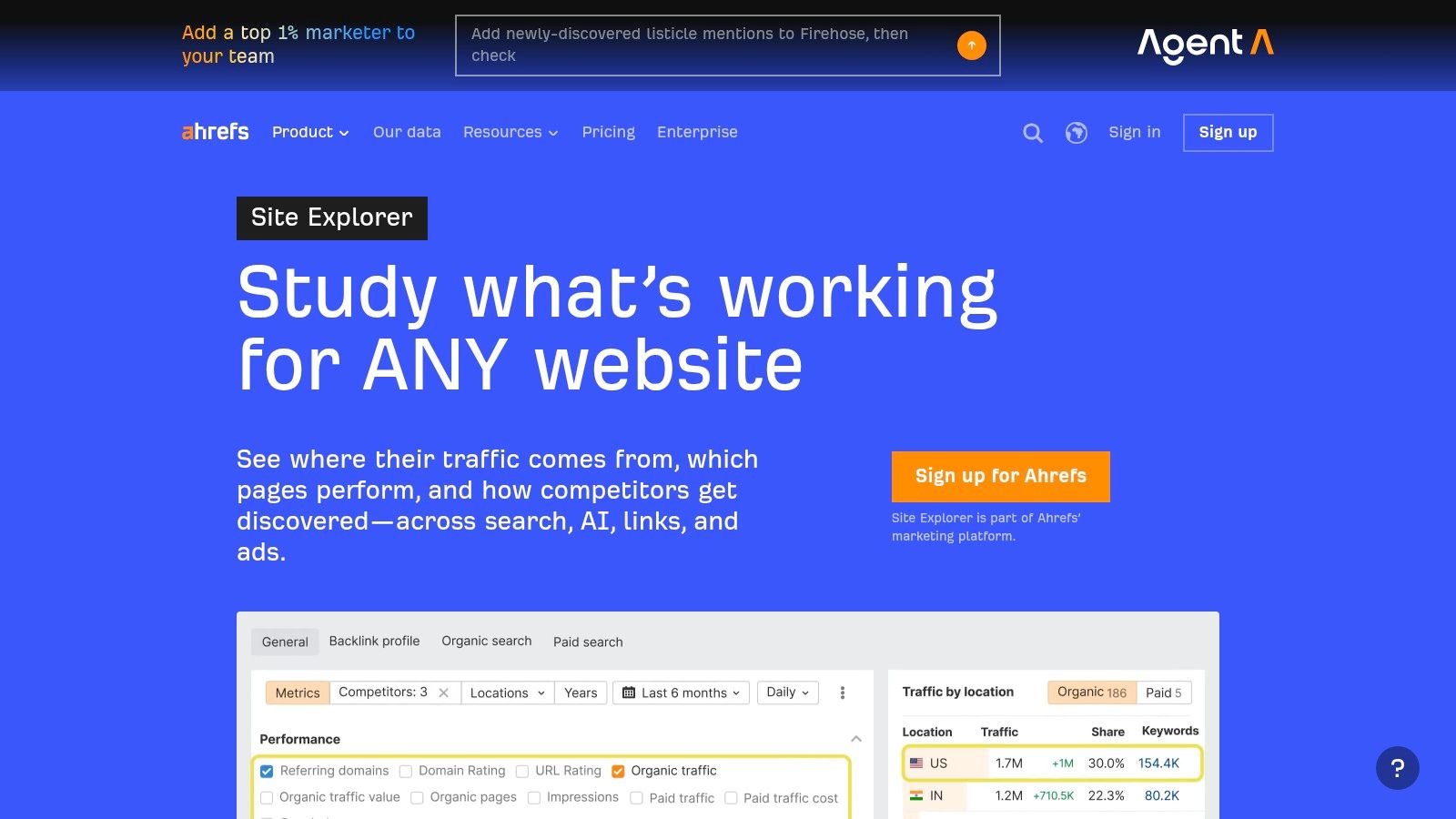
Tools like Ahrefs, Moz, and Semrush can all help you do this. The interface differs, but the workflow is similar.
If you need a broader process for site review, a website auditing checklist helps frame backlinks inside the rest of your SEO stack.
Start with the pages that matter commercially
Don't begin by staring at your homepage report. Start with the URLs that should drive pipeline or revenue.
For SaaS, that usually means:
- Product pages
- Comparison pages
- Solution pages
- High-intent blog content
For eCommerce, start with:
- Category pages
- Collection pages
- Best-selling product pages
- Commercial guides that assist purchase decisions
Then compare those pages against the equivalent pages on competitors' sites. You're not just looking for more links. You're looking for stronger referring domains and better topical fit.
What to look for in the audit
Use this checklist to keep the audit practical:
Referring domains
How many distinct sites link to you, and are they relevant to your market?Link quality
Review the pages sending links. Are they credible, readable, and contextually aligned with your business?Anchor text mix
Scan whether anchors look natural or overly repetitive.Link destination
Are links pointing only to your homepage, or are they strengthening deep pages that rank for commercial terms?Competitor gap
Which sites link to multiple competitors but not to you?
Audit for business value, not vanity. A clean report matters less than whether your priority pages have the authority needed to rank.
A good audit usually reveals one of two truths. Either your site lacks enough strong referring domains to compete, or your existing links are concentrated on the wrong pages. Both are fixable, but they require different campaigns.
The Business Impact of a Strong Backlink Profile
A SaaS founder launches a better feature set, tightens onboarding, and still watches a weaker product hold the top spots for high-intent searches. An eCommerce team improves conversion rate on collection pages, yet organic traffic plateaus because those pages never gain enough authority to compete. That gap is often a backlink gap.
Backlinks affect more than rankings in a vacuum. They change how easily your revenue pages can earn visibility, how quickly new pages get indexed and trusted, and how expensive growth becomes across channels. According to FireUs Marketing's backlink profile statistics summary, top-ranking pages average far more backlinks than pages in positions 2 through 10, and the strongest domains tend to have broad referring-domain depth, not just a handful of repeat links. For SaaS and eCommerce brands, that matters because search winners usually do not win on content alone. They win on authority attached to the pages that drive demos, trials, and purchases.
A strong backlink profile creates a real business advantage.
For SaaS, that advantage usually shows up in three places. Comparison pages rank sooner. Solution pages have a better shot at breaking into competitive categories. Product-led content gets more carryover value because the domain already has trust in the eyes of search engines. That lowers the amount of content support required to move a money page.
For eCommerce, the impact is just as direct. Strong links help category and collection pages compete for commercial searches that convert. Editorial assets, such as buying guides or product roundups, can support the sections of the site that generate orders. Brand mentions on relevant sites also create a second benefit. They send referral traffic and reinforce brand familiarity before the click.
That is where backlinks start to function like a moat. A competitor can copy pricing, design patterns, or feature language in a quarter. Reproducing years of earned references from relevant publications, industry blogs, review sites, and resource pages is much slower and more expensive.
The trade-off is straightforward. Good link acquisition takes time, budget, and editorial judgment. Weak link building can waste all three. I have seen teams buy volume, report big link counts, and get no lift on the pages that matter because the links came from irrelevant sites or pointed to content with no commercial connection. A smaller set of relevant, editorial links to the right pages usually produces better outcomes.
Teams that get results treat backlinks as part of demand capture, not as an isolated SEO task. They invest in assets worth citing, direct links toward pages with revenue potential, and measure impact on rankings, qualified traffic, pipeline, or sales instead of raw link totals.
If the question is whether backlinks are worth doing, the practical answer is simple. For SaaS and eCommerce, a strong backlink profile helps your best pages compete, reduces dependence on paid acquisition, and builds authority that rivals cannot copy quickly.
If you want a practitioner-led partner to build backlinks that support rankings, pipeline, and revenue, SaasSky is worth a look. They focus on SaaS and eCommerce brands, keep pricing transparent, and operate with the kind of accountability growth teams need when link building has to produce measurable business impact.