
You've spent hours searching for free guest posting sites, and the pattern is always the same. You find giant lists, click through, and land on abandoned blogs, obvious link farms, or “write for us” pages that subtly turn into paid placements once you reply. That wastes outreach time, burns writing hours, and leaves your team with nothing useful to show for it.
The Strategic Guide to Free Guest Posting in 2026 starts with one hard truth. High-value guest posting isn't about finding a form. It's about earning placement on sites that already protect their audience and editorial standards. As of 2026, there are over 150 verified free guest posting sites globally, and the average Domain Authority across a curated set of 175 sites is approximately 60, with traffic ranging from 1,000 to 46.8 million+ visits per month. That sounds promising, but the range is exactly why a random list isn't enough.
Use three filters before you pitch any publication. First, niche relevance. Does the readership match your ideal customer profile? Second, audience alignment. Are you writing for operators, executives, buyers, or a general business audience? Third, editorial quality. Does the site edit aggressively enough that a published byline is meaningful?
That's the lens behind this list. These aren't just URLs. They're practical options for SaaS and eCommerce teams that want authority, referral traffic, and real brand lift without wandering into low-quality placements. I've also included a prioritization model and outreach templates so you can build a target list that fits your actual goals.
Table of Contents
- 1. Zapier Blog
- 2. G2 Learn Hub
- 3. TechTarget
- 4. Search Engine Journal
- 5. Search Engine Land
- 6. Databox Blog
- 7. Business 2 Community
- 8. HackerNoon
- 9. DZone
- 10. SitePoint
- Top 10 Free Guest Posting Sites Comparison
- Your Outreach Playbook and Next Steps
1. Zapier Blog
Zapier Blog is one of the cleaner fits for SaaS brands that can teach with workflows, automation, AI operations, and practical productivity use cases.
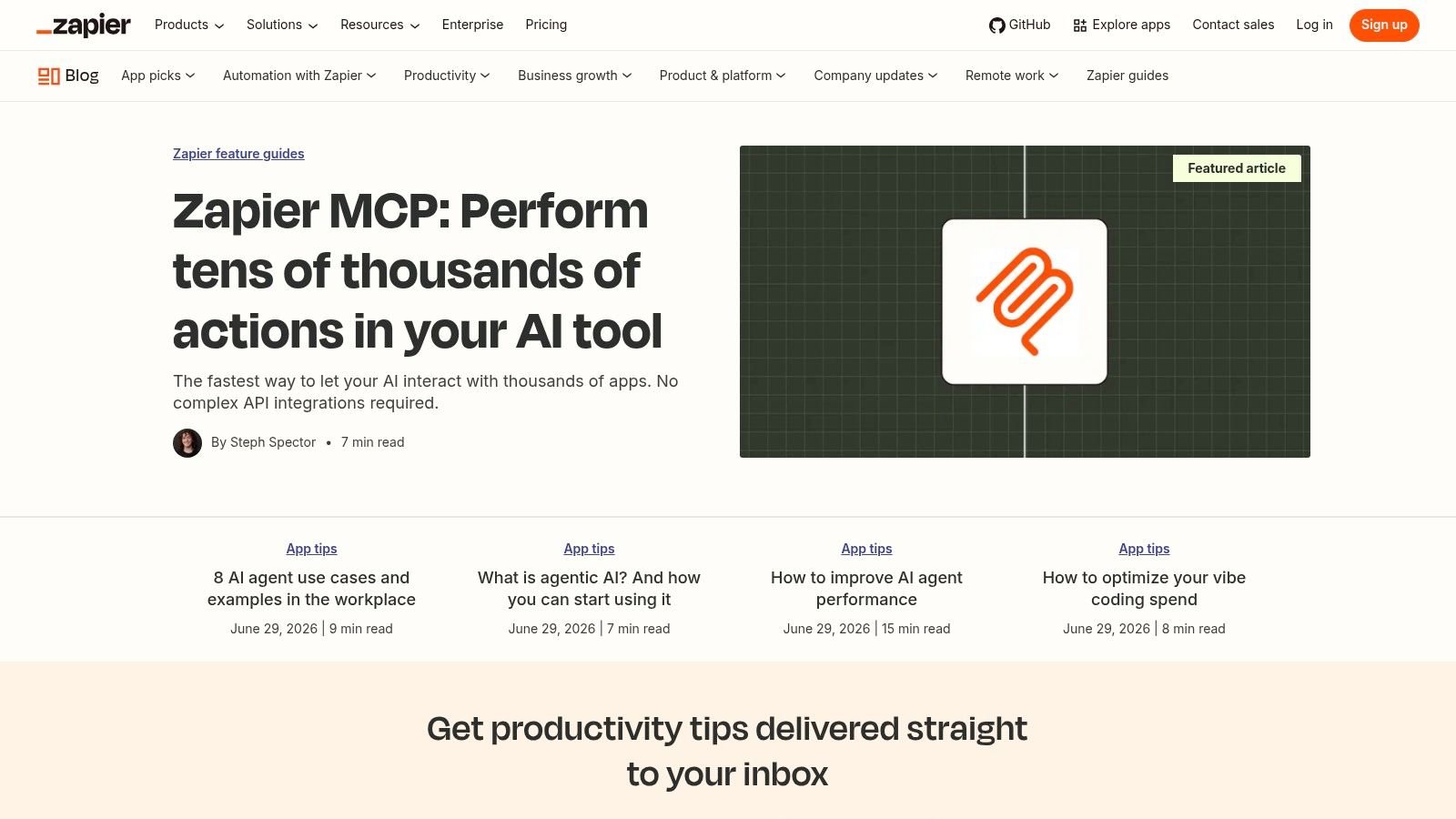
The publication has a defined editorial process, and that matters. You're not guessing whether a pitch went into a void. You're pitching a team that already knows how to package tutorials and tool-driven articles for operators, marketers, and process-minded readers.
Best fit and trade-offs
Zapier works best when your product sits inside a workflow. If you sell a CRM, support platform, data connector, scheduling tool, or operations product, you can usually frame a contribution around a process problem instead of a product mention. That's the difference between a pitch that sounds editorial and one that sounds sponsored.
What usually works:
- Workflow-led angles: Show how teams connect tools, reduce manual steps, or standardize repeatable tasks.
- Operator audience fit: Write for someone managing execution, not someone looking for a brand story.
- Specific tooling examples: Mention real apps and real use cases, not abstract “automation trends.”
The downside is obvious. Editors control links, examples, and framing. If you need exact anchor text or a guaranteed commercial link, this isn't the right play. If you want the kind of placement that fits a white hat link building approach, it's a strong target.
Practical rule: Don't pitch Zapier with “why our SaaS is better.” Pitch “how teams solve X with a stack that happens to include tools like ours.”
For SaaS, I'd prioritize Zapier if your buyer is hands-on and your product is easy to explain through process design. For eCommerce brands, it's more selective. You need an operations or marketing systems angle, not a store growth opinion piece.
2. G2 Learn Hub
G2 Learn Hub is better than many marketers expect because its audience is already close to buying software. You're not writing into a general-interest void. You're writing for people comparing categories, evaluating tools, and trying to understand how software decisions affect go-to-market execution.
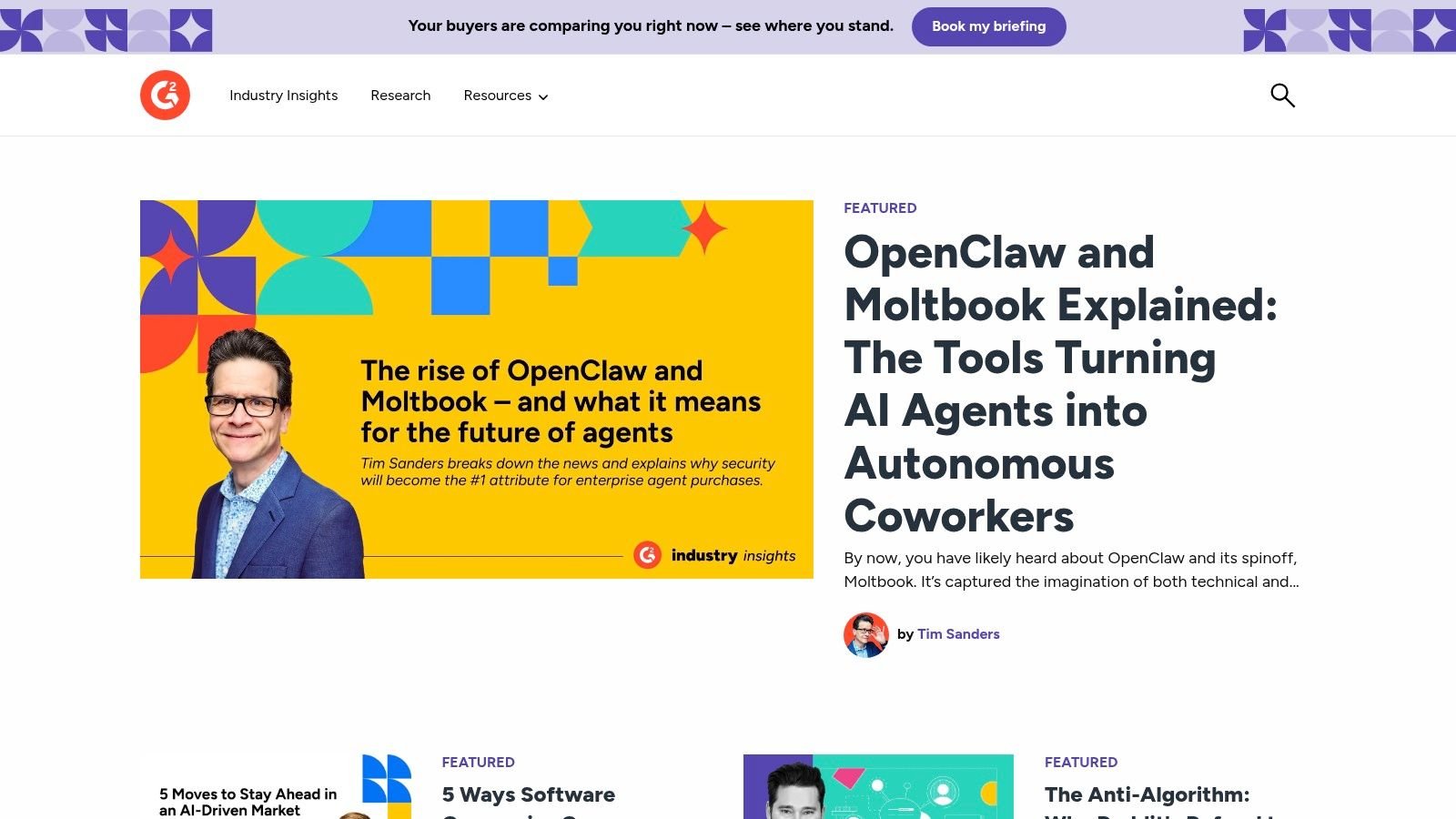
The contributor network leans toward practitioner-led writing. That means lived experience, distinct voice, and clean argumentation usually beat generic educational content.
Where it wins
G2 is especially useful for B2B SaaS teams selling into categories buyers actively research. Think RevOps, sales tech, customer success, product analytics, support, or martech. If you can teach from direct execution, you can build credibility with a highly relevant audience.
A few strengths stand out:
- Buyer proximity: Readers are often evaluating software, not just browsing.
- Category alignment: Your expertise can map directly to your product category.
- Credibility effect: A solid byline on G2 helps sales teams, partnerships, and founder branding.
The trade-off is competition. G2 doesn't need another surface-level piece on “what is lead generation” or “top CRM trends.” You need a sharper point of view and a cleaner pitch. That's where disciplined outreach for SEO makes a difference. Your outreach has to show you read existing coverage and found an angle they haven't exhausted.
According to 2025 guest posting data, 60% of companies produce one to five guest posts per month, while only 3% produce more than 100. That's a useful reminder for G2. Treat it as a selective channel, not a volume play.
3. TechTarget
TechTarget is where enterprise-focused SaaS teams should spend time if they understand their niche. It isn't one broad publication. It's a network of technology properties with narrower editorial lanes, which makes it possible to match your pitch to a very specific audience.
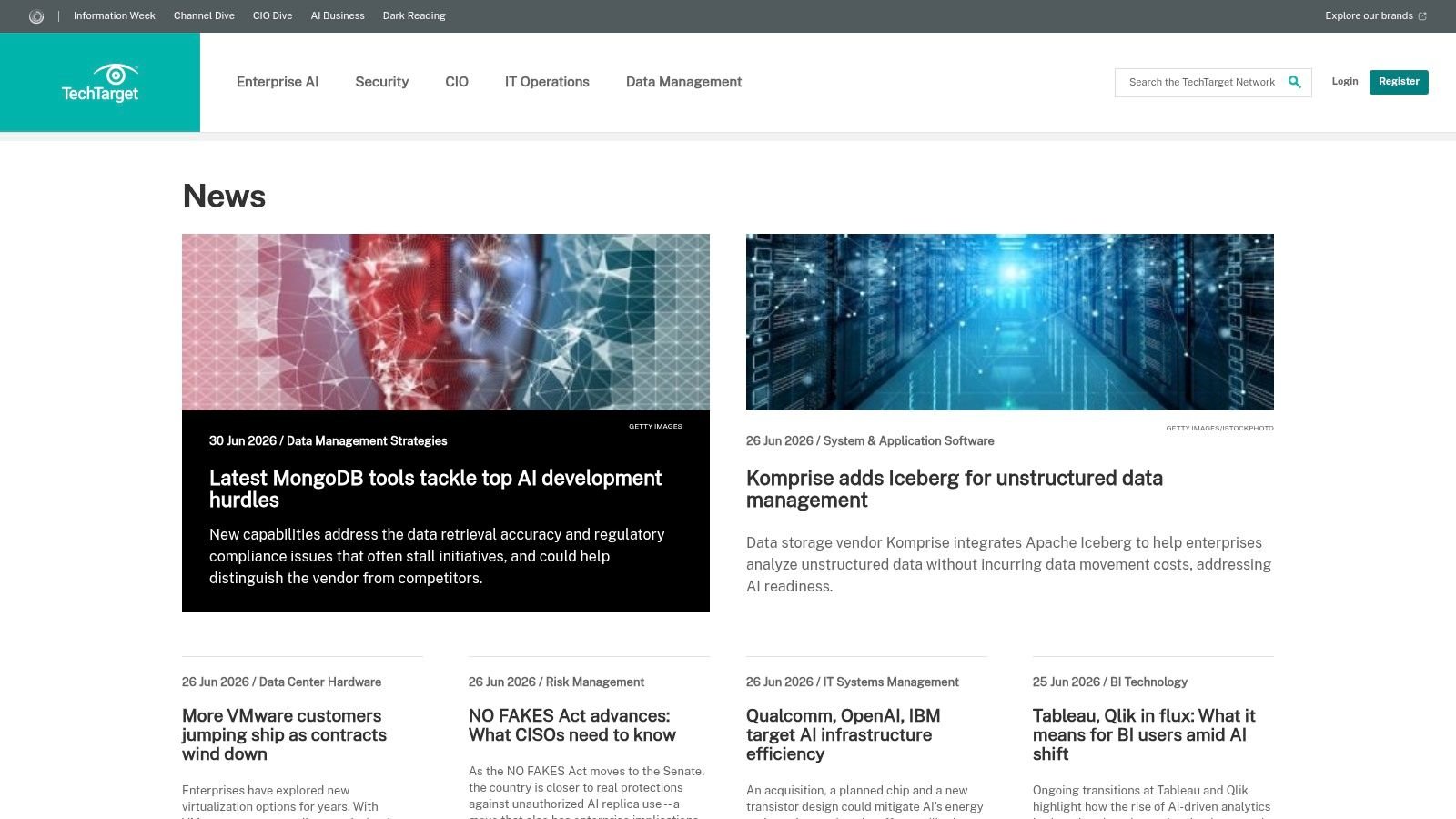
This is not the place for broad startup thought leadership. It's a fit for enterprise software, infrastructure, data, security, customer experience, and technical buying topics where subject matter depth matters.
How to approach TechTarget
The biggest advantage is precision. A cybersecurity vendor doesn't need a generic tech audience. A martech platform doesn't need casual startup readers. TechTarget lets you pitch by vertical, which means your article can land in front of practitioners and decision-makers who actively care about the subject.
That precision brings stricter editorial expectations:
- Topic targeting matters: You need to choose the right property and editor.
- Promotional language gets cut fast: Product-led framing usually won't survive.
- Sourcing expectations are higher: Claims need support, examples need clarity, and the piece must teach.
This is one of the strongest free guest posting sites for enterprise credibility, but it's also one of the hardest. I'd only prioritize it if your team has a real operator, product leader, architect, or specialist who can write from experience.
Write the article your best prospect would send internally to a teammate. That's the quality bar.
For eCommerce, TechTarget is usually not the first target unless you're selling infrastructure, analytics, search, personalization, payments, or data tooling into serious technical teams.
4. Search Engine Journal
Search Engine Journal is a sharp fit for agencies, SEO SaaS companies, analytics platforms, and eCommerce brands with search depth. Its readership expects practical information, not recycled commentary.
If your pitch sounds like a rewritten conference talk or a dressed-up blog post your company already published, it probably won't get through. SEJ rewards original observations and tactical writing.
What gets accepted
The strongest angles usually come from active work. Think technical SEO implementation lessons, content process mistakes, search behavior shifts, testing frameworks, analytics interpretation, or AI search changes that affect operations. Senior marketers read SEJ because they want something useful enough to apply, challenge, or share.
This is also where many link builders misread the opportunity. They obsess over the backlink and forget the audience. Editors won't care whether your preferred anchor is follow or nofollow if the article itself doesn't clear the quality bar. If your team still needs that distinction clarified, this guide on follow and nofollow links is worth reviewing before outreach.
One reason to be selective with all free guest posting sites is quality decay. As noted in BuzzStream's analysis of guest posting sites, many top-ranking guest post lists became unreliable after the Helpful Content Update, and a large share of previously ranking sites lost visibility. That's why SEJ matters. It's an editorial brand, not a spreadsheet entry.
5. Search Engine Land
Search Engine Land is narrower than SEJ, and that's exactly why it works. If your team has a strong perspective on search, AI search, SERP changes, or performance marketing strategy, this is one of the best mastheads on the list.
Its audience skews more senior. That changes the writing style you should bring. Broad educational content won't stand out. Original analysis, strong framing, and timely interpretation have a better chance.
Best use case
Search Engine Land is strongest when your company sees something early and can explain why it matters. That could come from campaign management, platform shifts, reporting changes, or workflow changes inside modern search programs. The pitch should feel informed, concise, and current.
Where teams get this wrong is by submitting timeless beginner content. Search Engine Land doesn't need another article defining SEO basics. It wants interpretation that helps experienced marketers decide what to do next.
Here's the trade-off:
- Prestige is high: A byline here signals real category credibility.
- Topical fit is strict: If your insight is only loosely connected to search, it won't land.
- Turnaround varies: News-adjacent topics can move faster than evergreen ones.
For SaaS brands in SEO, PPC, analytics, or AI search infrastructure, I'd rank this near the top. For eCommerce, it's valuable if your in-house growth team can contribute operational insight tied to search performance or merchant discovery.
6. Databox Blog
Databox Blog is one of the most practical free guest posting sites for SaaS marketers who can support an argument with real examples, benchmarks, process screenshots, or reporting logic.
This is not the place for vague growth advice. Databox has built a reputation around analytics, RevOps, KPIs, dashboards, and data-backed content. If your team already lives in attribution reports, CRM stages, lifecycle metrics, or forecasting problems, the editorial fit is strong.
Strong angles for Databox
Good pitches for Databox usually have one of two shapes. Either you bring a structured framework that helps readers measure something better, or you bring firsthand observations grounded in campaign data or operational reporting.
That makes it especially useful for:
- RevOps teams: Pipeline measurement, attribution logic, and reporting alignment.
- SaaS marketers: Content performance, funnel reporting, and dashboard design.
- eCommerce operators: Channel mix reporting, retention analysis, and merchandising metrics.
The extra work is real. Databox often suits teams willing to build an outline carefully before drafting. If your internal experts are disorganized, this can feel slow. If they already have dashboards, notes, and pattern recognition, it's a strong channel.
Field note: Databox rewards specificity. Even when you can't publish internal numbers, you can still explain method, setup, trade-offs, and interpretation.
This is also one of the better portfolio-building placements for consultants and in-house operators who want a byline that sales and partnerships teams can reuse.
7. Business 2 Community
Business 2 Community sits in a different lane from the stricter trade publications. It's broader, more accessible, and often more forgiving than top-tier editorial outlets.
That doesn't make it low value. It makes it useful for the right job. If your team is building contributor history, testing which ideas resonate, or trying to support founder visibility, Business 2 Community can play a practical role.
How to use it well
The mistake is treating it like a place to dump generic content. Because the publication covers a wide range of business and marketing topics, weak pieces disappear into the mix. Strong pieces still need a clear audience and a direct takeaway.
I'd use it in three cases:
- Early portfolio building: Good for newer contributors who need published examples.
- Broad SMB education: Useful when your target reader isn't overly technical.
- Repurposed expertise: Strong home for a refined internal point of view that's too broad for a niche trade outlet.
This isn't where I'd send your best original enterprise angle or your most technical SEO analysis. But if you need a credible middle-tier placement in your program, it has a place.
For eCommerce brands targeting founders, operators, or general business readers, it's often easier to fit than the developer or search-first sites on this list.
8. HackerNoon
HackerNoon is one of the most useful hybrid options on this list. It has a community-driven submission model, but it still maintains editorial review and audience expectations.
That makes it a good fit for founder narratives, technical explainers, product lessons, engineering write-ups, and opinionated stories about building with new tools. It's less formal than legacy trade media, but it's not a dumping ground either.
When HackerNoon makes sense
HackerNoon works best when you have a story to tell, not just a keyword to target. A technical founder can explain why a system was built a certain way. A product lead can unpack trade-offs in shipping AI features. A SaaS company can turn an internal lesson into a public article if the insight is transferable.
The speed is attractive, but the quality bar has risen. Editors and readers can spot a disguised sales pitch quickly.
A practical way to think about HackerNoon:
- Best for narratives and lessons: Product building stories tend to fit naturally.
- Good for technical SaaS: Especially when your team can explain implementation choices.
- Less ideal for pure marketing: Demand gen takes a back seat unless tied to product or tech.
The larger shift in guest posting supports this approach. As highlighted in this practitioner discussion on modern pitch quality, generic pitches don't work well with editors anymore. Relevance, effort, and actual contribution matter more than mass outreach.
9. DZone
DZone is for teams that can teach developers something concrete. If your content team can't produce a technically useful article with real implementation detail, skip it.
That sounds harsh, but it saves time. DZone readers care about architecture, APIs, DevOps, code samples, cloud workflows, and engineering practice. They don't care about polished B2B messaging.
What technical teams should pitch
The best DZone articles usually solve a real implementation problem. That could be authentication design, event processing, observability setup, integration architecture, platform engineering workflows, or practical use of AI in development environments.
If you sell technical SaaS, DZone can be excellent because the audience already speaks the language. A good article there supports more than SEO. Sales engineers, developer advocates, and product marketers can all reuse it in conversations.
Keep these constraints in mind:
- Technical depth is mandatory: Surface-level content won't hold up.
- Originality matters: Repackaged docs won't feel editorial.
- Commercial framing should stay subtle: Education comes first.
For eCommerce brands, DZone only fits if you're publishing technical content about infrastructure, headless commerce, search systems, performance engineering, or integrations.
10. SitePoint
SitePoint has stayed relevant by serving developers and designers who want practical tutorials, explainers, and commentary with real utility.
For SaaS companies building dev tools, front-end products, design systems, AI coding utilities, or workflow software that touches engineering teams, SitePoint is often a better fit than broader business publications. It has a clearer audience and a stronger expectation of technical usefulness.
How to position your article
SitePoint tends to reward articles that teach by doing. Tutorials, implementation walkthroughs, code-connected explainers, and tool comparisons fit better than abstract thought leadership. If your article could double as onboarding material for a junior developer, you're probably close to the mark.
That makes SitePoint especially practical for:
- Developer experience products: Explain how your category solves a real dev pain point.
- Frontend and UI tooling: Articles about implementation patterns fit naturally.
- AI dev workflows: Strong if grounded in actual usage, not hype.
This is one of the better free guest posting sites for teams sitting at the intersection of product marketing and developer education. But don't force a marketing article into a technical publication. If the content doesn't help someone build, debug, or evaluate a workflow, it probably belongs somewhere else.
Top 10 Free Guest Posting Sites Comparison
| Publication | Core features ✨ | Target audience 👥 | Editorial rigor ★ | Value & link opportunity 💰🏆 |
|---|---|---|---|---|
| Zapier Blog | Automation, AI workflows; clear pitch form | SaaS operators, ops/automation pros | ★★★★☆, selective; 4–6wk turnaround | Strong organic reach; editorial link control 💰 |
| G2 Learn Hub | Contributor network; buyer-facing GTM content | B2B buyers, GTM & product teams | ★★★★☆, originality required; thorough review | High relevance to buyers; credibility builder 💰 |
| TechTarget | Multi-vertical enterprise sites; editor-by-site pitching | Enterprise IT & decision-makers | ★★★★★, very strict sourcing & edits | Enterprise authority; multi-site placement potential 🏆💰 |
| Search Engine Journal (SEJ) | SEO/PPC practitioner pieces; tactical focus | Marketers, SEO & analytics pros | ★★★★☆, high bar; link scrutiny | High DA + strong amplification for published pieces 🏆💰 |
| Search Engine Land | Search & AI-search analysis; news-adjacent angles | Senior marketers, search leaders | ★★★★☆, exacting standards; timely fit | Prestigious masthead; fast traction on timely topics 🏆 |
| Databox Blog | Data studies & analytics guides; survey-based posts | SaaS marketers, RevOps & analysts | ★★★★☆, outline approval; data-heavy | Data-backed content often earns links & visibility 💰 |
| Business 2 Community | Broad contributor portal; varied categories | SMBs & mid-market business readers | ★★★☆☆, lower barrier; variable moderation | Good for visibility & building contributor portfolio 💰 |
| HackerNoon | Open submission tech community; fast path | Engineers, founders, product teams | ★★★☆☆, open but competitive for homepage | Fast publication to tech audience; narrative-friendly 💰 |
| DZone | Deep technical walkthroughs & code samples | Developers, platform engineers | ★★★★☆, strict technical quality | Ideal for in-depth dev content and niche authority 🏆 |
| SitePoint | Dev/design tutorials & community articles | Front-end devs, designers, tooling teams | ★★★☆☆, technical emphasis; vetted posts | Trusted dev/design brand; accessible community track 💰 |
Your Outreach Playbook and Next Steps
A list of targets helps, but it doesn't land placements on its own. The pitch does that. Editors decide quickly whether you understand their audience, whether you've read their publication, and whether your article idea fills a content gap instead of repeating something already covered.
Start with prioritization. If you're a SaaS brand selling to operators, rank Zapier, G2, Databox, SEJ, and Search Engine Land higher. If you sell technical products, move TechTarget, DZone, HackerNoon, and SitePoint up the list. If you're an eCommerce brand, focus on where your expertise naturally translates. That often means analytics, search, operations, merchandising systems, retention, or growth infrastructure, not generic “how to scale your store” pitches.
The easiest way to waste time is to contact every site with the same template. That's exactly the behavior that made most guest posting inboxes miserable. Instead, send fewer pitches and make each one specific.
Use a structure like this:
Outreach template
Subject: Contribution idea for [Publication Name]
Hi [Editor Name],
I've been reading your coverage on [specific topic or recent article angle]. I noticed you've covered [related area], but I didn't see a piece focused on [clear gap].
I'd like to contribute an article on: [proposed title]
The piece would cover:
- [specific takeaway one]
- [specific takeaway two]
- [specific takeaway three]
Why I'm a fit: [brief credibility statement tied to hands-on experience]
I can also tailor the angle if you'd prefer it framed for [their audience segment].
Best,
[Name]
That works because it respects the editor's time. It shows relevance, not desperation. It also gives you room to adapt the same core expertise for different publications without sounding copied.
A second template works well when you already have proprietary experience but can't share sensitive data:
Short pitch idea: we've seen recurring mistakes in [workflow/category], especially around [problem]. I can turn that into a practical article with screenshots, process details, and examples readers can apply without needing our internal numbers.
That kind of pitch often lands better than overpromising “data-backed insights” you don't end up publishing.
There's also a trap in the word free. You're not paying a placement fee, but you are paying in strategist time, expert time, writing time, editing time, and follow-up time. For lean teams, that's often worth it. For growth-stage teams trying to build links predictably, the math changes. At some point, the ROI of doing every pitch and draft internally starts to shrink.
That's when working with a practitioner-led partner can make sense. A service like SaasSky can help SaaS brands secure relevant, high-authority placements without turning the internal marketing team into a full-time outreach desk. The best model isn't “free versus paid.” It's controlled effort versus wasted effort.
The end goal is the same either way. Build a repeatable guest posting program, not a one-off win. One strong placement can help. A sustained program builds authority, relationships, and durable search value over time.
If you want help turning this list into a working link-building pipeline, SaasSky is built for that. They work with SaaS and eCommerce brands that need vetted placements, clear process, transparent pricing, and execution led by practitioners who understand what editors will accept.