Average monthly SEO costs usually land between $1,500 and $5,000, and about $3,200 per month is a practical starting benchmark if you're hiring an agency. But the answer depends on what you need SEO to do for the business, how much work your site needs, and whether you're buying strategic growth support or just a narrow deliverable.
That range surprises founders for a reason. SEO often gets sold like a commodity, but it behaves more like a mix of product strategy, technical consulting, content operations, and distribution. Two companies can both say they “need SEO” and require completely different budgets. A seed-stage SaaS company with a clean site and a narrow ICP doesn't need the same program as an eCommerce brand with thousands of URLs, crawl issues, weak category pages, and an aggressive revenue target.
If you're setting your first serious marketing budget, the average cost for seo services matters less than the cost of buying the wrong scope. Underfund the work, and nothing meaningful happens. Overpay for the wrong package, and you get reports, rankings chatter, and little impact on pipeline or sales.
Table of Contents
- Why Is SEO Pricing So Hard to Pin Down?
- Decoding the Three Main SEO Pricing Models
- What Actually Drives SEO Service Costs?
- Average SEO Cost Benchmarks by Service Type
- A Budgeting Guide for SaaS and eCommerce Brands
- How to Vet Providers and See Beyond the Price Tag
- Making Your First Confident SEO Investment
Why Is SEO Pricing So Hard to Pin Down?
Most founders start with the same question. What does SEO cost? The frustrating part is that almost every quote is technically plausible.
One provider pitches a lightweight package for a modest monthly fee. Another proposes a larger retainer with technical audits, content production, and authority building. A third offers advisory support only. All of them call it SEO, but they're not selling the same thing.
That gap exists because SEO pricing reflects the work required to win in your market, not just a service label. A local lead generation site, a product-led SaaS company, and a large catalog eCommerce store don't need the same inputs. Competitive pressure, content depth, engineering complexity, and distribution needs all change the scope.
Practical rule: If two proposals have very different prices, compare scope first, not the total.
This is also why average pricing can mislead. Benchmarks are useful for grounding your expectations, but they don't tell you whether your company needs a foundational cleanup, a focused content engine, or a full program that includes technical remediation and authority building.
For SaaS and eCommerce teams, one of the biggest blind spots is assuming rankings are the product. They aren't. Revenue impact comes from ranking for the right intent, fixing the pages that block conversions, and building enough site authority to compete. That usually requires more than keyword mapping and title tag edits.
A better way to think about pricing is this:
- Foundational SEO fixes discoverability, crawlability, structure, and key page targeting.
- Growth SEO adds recurring content, link acquisition, internal linking, and performance reviews.
- Advanced SEO often includes technical oversight, migration support, and coordination with product or engineering.
If you're trying to understand why one quote feels thin and another feels expensive, this breakdown helps. It also aligns with ranking inputs discussed in Google PageRank factors, where authority and site structure shape outcomes as much as on-page optimization.
Decoding the Three Main SEO Pricing Models
SEO is usually sold in three ways. Monthly retainer, project work, or hourly consulting. Think of them like renting an apartment, hiring a contractor for a renovation, or bringing in a specialist for advice.
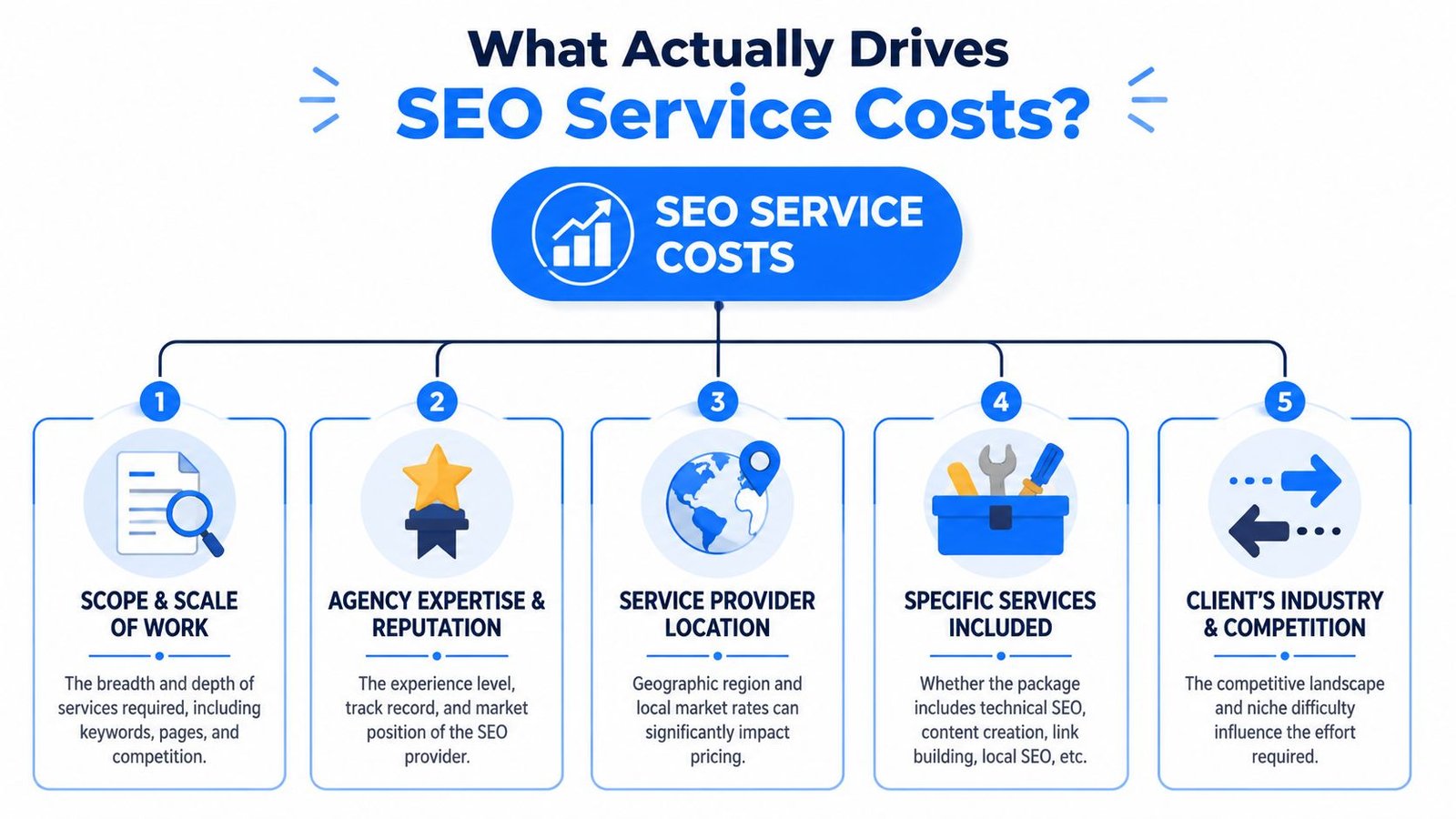
According to Reboot's SEO pricing benchmarks, ongoing monthly SEO support typically ranges from $1,500 to $5,000 per month, and Clutch's 2026 agency pricing guide reports an average monthly cost of $3,199.19. That's why many companies treat SEO as an operating budget, not a one-time spend.
Monthly retainer
A retainer is the standard model for companies that need ongoing execution. You're paying for continuous work over time, usually across strategy, content planning, on-page updates, technical oversight, reporting, and off-page authority building.
This model works best when SEO is part of your growth plan, not a side project. SaaS companies often need compounding gains from comparison pages, solution pages, integration pages, and bottom-funnel content. eCommerce brands need repeated work across collections, product templates, internal links, and category architecture.
Why retainers work well
- They support compounding work because SEO gains usually come from repeated iteration.
- They match how search performance behaves since technical fixes, publishing cadence, and authority building don't happen once.
- They create accountability when deliverables and business goals are clearly defined.
The downside is simple. A weak retainer can become vague fast. If a provider can't explain what work happens each month and how that work connects to revenue, the model turns into a subscription for activity.
Project-based work
Project pricing makes sense when the outcome is specific and time-bound. Good examples include a technical audit, site migration planning, an information architecture overhaul, or a content refresh initiative.
This is often the right first move for companies that know the constraint. If your site has indexing problems, template issues, or a broken internal linking structure, you may need a defined project before you need an ongoing retainer.
A project can diagnose the problem. It usually doesn't build the long-term engine.
Project work is cleaner to scope, but it has limits. Once the deliverable is complete, someone still needs to implement recommendations, monitor results, and keep momentum going.
Hourly consulting
Hourly consulting works when you already have internal execution capacity. Maybe you have a content marketer, a product marketer, and a developer, but need a senior SEO strategist to shape the roadmap and review decisions.
This model is useful for:
- Leadership guidance on where to allocate budget
- Migration reviews before launch
- Team training for content or product marketing
- Technical troubleshooting when internal teams need specialist input
It tends to break down when a company expects strategic thinking and execution from a few advisory hours. Consulting can sharpen decisions. It rarely replaces hands-on production.
What Actually Drives SEO Service Costs?
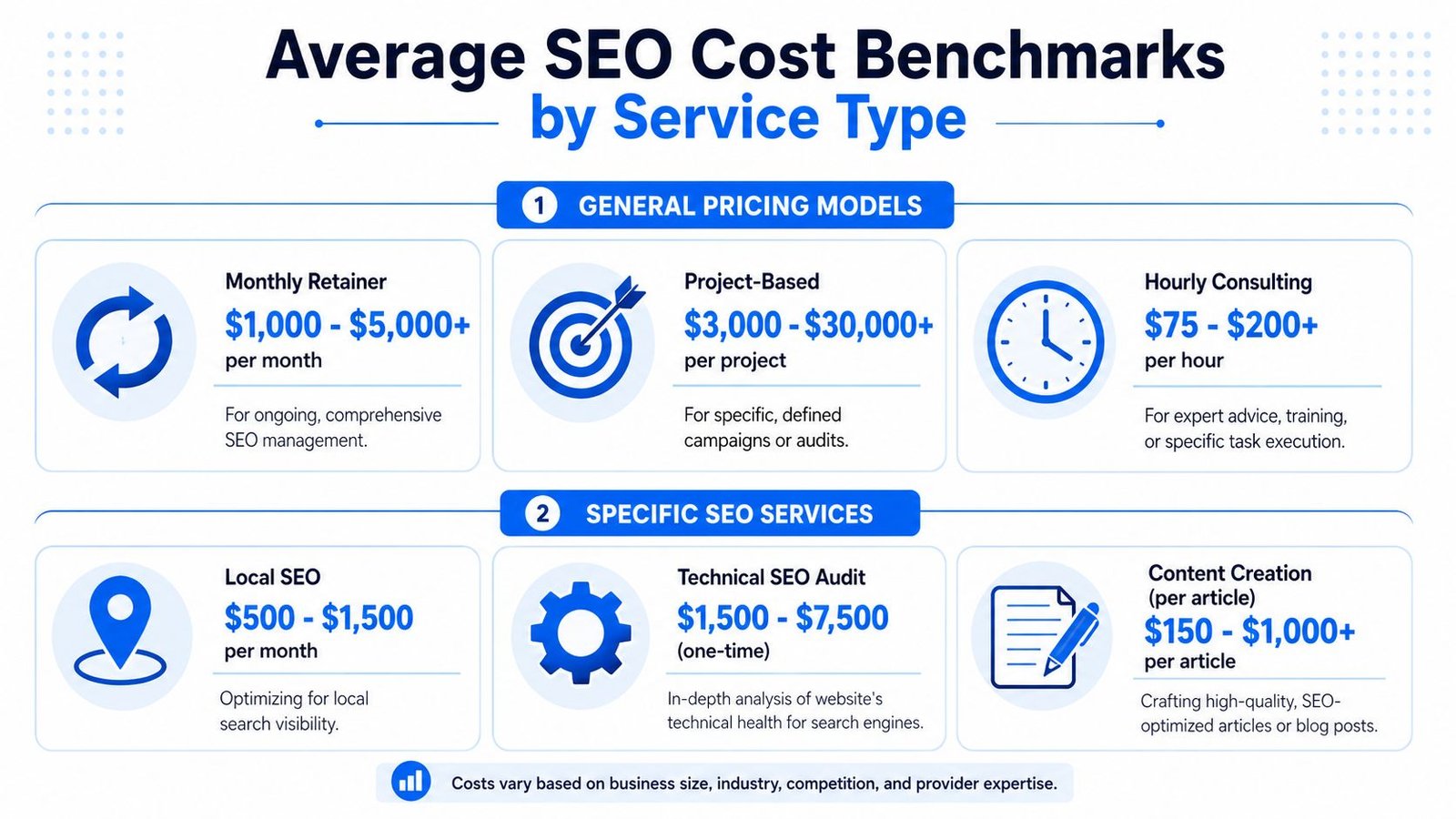
The price isn't random. SEO cost usually comes from a handful of variables that stack on top of each other.
Scope changes the budget first
The first pricing driver is scope. A campaign limited to keyword research, on-page edits, and reporting costs less than one that includes technical audits, implementation support, content briefs, editorial production, digital PR, and link acquisition.
Many teams misread the average cost for seo services. They compare retainers without checking what sits inside them. A cheaper quote may exclude content strategy, backlinks, developer coordination, or technical fixes. That can make it look efficient while effectively removing the work most likely to change outcomes.
A simple way to audit scope is to ask whether the proposal includes these workstreams:
| Workstream | Usually low effort | Usually high effort |
|---|---|---|
| Technical SEO | Basic checks | Deep diagnostics and implementation support |
| Content | Topic list only | Research, briefs, optimization, refreshes |
| Authority | Minimal outreach | Ongoing link acquisition and digital PR |
| Analytics | Rank reports | Conversion analysis and page-level decision making |
Your starting point changes the workload
A clean site with strong product pages and decent brand demand is cheaper to improve than a site with structural issues. If Google Search Console shows indexing gaps, duplicate pages, weak templates, or crawl waste, the provider has more work before growth work even starts.
That is especially true in technical SEO. Hennessey Digital's technical SEO cost benchmarks report technical SEO audits at $300 to $5,000, implementation at $55+ per hour or $300+ per project, consulting at $100+ per hour, and maintenance at $150+ per month. The same source notes that technical complexity pushes audit depth and labor upward, especially when site architecture and engineering dependencies increase.
For SaaS, common cost drivers include:
- JavaScript rendering issues that affect crawl and indexation
- Template inconsistency across feature, industry, or comparison pages
- Migration risk during redesigns or CMS changes
For eCommerce, the usual culprits are different:
- Large URL inventories with filters, faceted navigation, and duplication
- Thin category content that doesn't deserve to rank
- Internal linking gaps between collections, guides, and product pages
If your site has unresolved technical debt, the audit is not the budget. It's the opening bill.
Provider quality and operating model matter
A solo consultant, a specialist boutique, and a large agency don't price the same way. Some of that difference is overhead. Some of it is real expertise. Some of it is a matter of packaging.
What matters is whether the provider can connect search work to business outcomes. The best partners don't just list deliverables. They explain why those deliverables matter for your funnel, your sales motion, and your page types.
Cheap SEO often fails in predictable ways:
- Generic deliverables with no connection to your revenue pages
- Reporting-heavy programs with little implementation
- Volume tactics that produce pages and links without strategic fit
Expensive SEO also fails when teams confuse polish with depth. A slick deck doesn't fix weak prioritization.
Average SEO Cost Benchmarks by Service Type
Benchmarks help when you're trying to sanity-check proposals. They don't replace scoping, but they do tell you when a quote sits inside a normal range and when it deserves more scrutiny.
Core pricing benchmarks
Ahrefs' 2024 SEO pricing poll found that SEO services usually range from $250 to $10,000 per month, with 63% of businesses spending between $500 and $5,000. In that same dataset, the average SEO spend was $2,917 per month, while agencies averaged $3,209 per month and freelancers averaged $1,348 per month.
Budget anchor: If you're hiring an agency for ongoing work, $3,209 per month is a realistic reference point, not a guarantee of fit.
The same Ahrefs data also found the average hourly rate was $111, and the most common hourly range was $100 to $150. That matters if you're comparing strategic consulting against a monthly retainer and trying to decide whether you need execution support or just senior guidance.
Reboot's industry summary, referenced earlier, also shows why retainers dominate this category. Ongoing SEO is usually bought as recurring support because rankings depend on repeated work across pages, links, and technical improvements.
Specialized and local SEO benchmarks
Local SEO tends to cost less than broader national or category-wide programs. In the Ahrefs poll, local SEO averaged $1,557 per month. That's useful if you're comparing a local service footprint against a SaaS or eCommerce program with larger content and authority demands.
Technical SEO is usually priced separately because it behaves like a specialist service. Hennessey Digital reports technical SEO audits at $300 to $5,000 and consulting at $100+ per hour, which is why many teams budget technical work separately from ongoing content or authority campaigns.
A quick comparison helps:
| Service type | Benchmark |
|---|---|
| Ongoing SEO support | $1,500 to $5,000 per month in Reboot's summary |
| Average agency monthly cost | $3,209 per month in Ahrefs |
| Average freelancer monthly cost | $1,348 per month in Ahrefs |
| Average hourly SEO rate | $111 in Ahrefs |
| Local SEO average | $1,557 per month in Ahrefs |
| Technical audit | $300 to $5,000 from Hennessey Digital |
For SaaS and eCommerce operators, the trap is comparing these figures without matching them to the actual workload. A content-led SaaS program may need strategic content production and strong link acquisition. An eCommerce brand might need template fixes, collection page optimization, and category authority building through white hat link building.
Those are different programs. They can share a price band while producing very different business value.
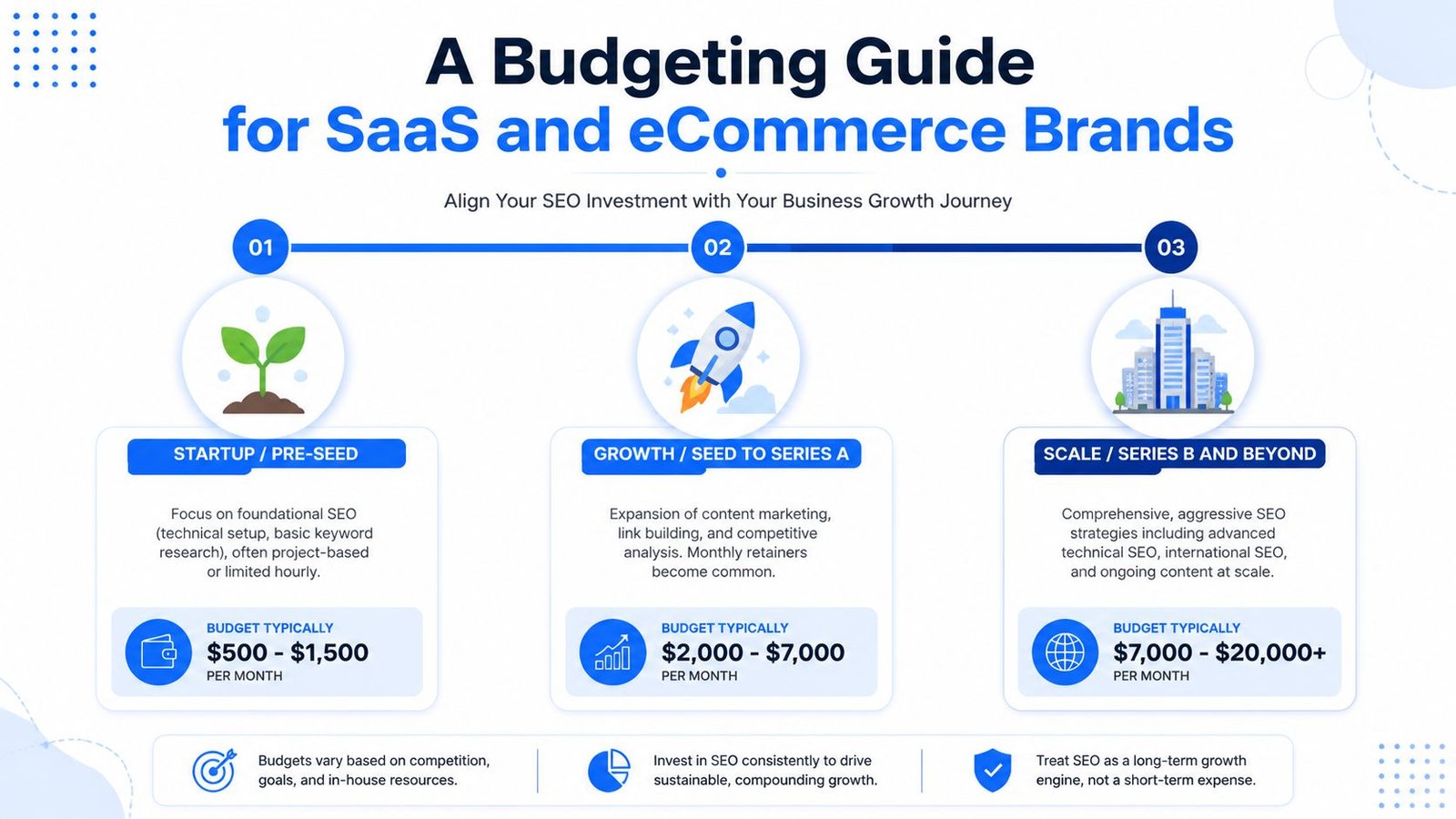
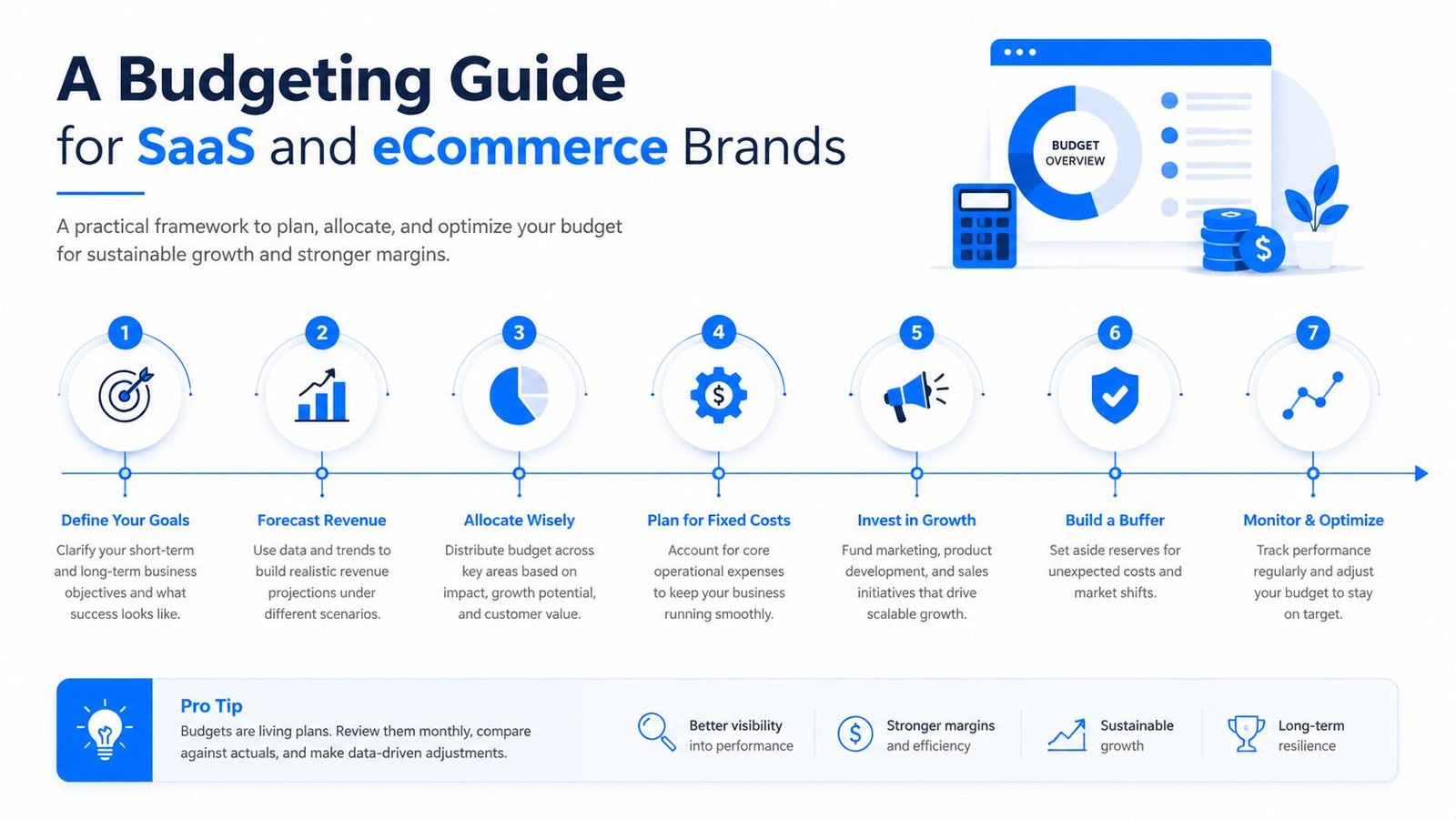
A Budgeting Guide for SaaS and eCommerce Brands
Most first-time SEO budgets fail for one reason. The budget isn't tied to the company's stage.
A startup SaaS company usually doesn't need an oversized retainer with broad deliverables. A growth eCommerce brand usually can't get away with a lightweight package that only touches metadata and blog posts. Budget has to follow the bottleneck.
Early-stage SaaS playbook
Consider a seed-stage B2B SaaS company selling into a narrow market. The site has core product pages, a handful of blog posts, and little domain authority. The company wants demo-qualified traffic, not just top-of-funnel visits.
In that situation, the smart budget usually prioritizes focus over breadth. The company doesn't need dozens of articles out of the gate. It needs a strong technical baseline, clear keyword mapping to commercial intent, a handful of high-conviction landing pages, and disciplined internal linking.
A practical initial setup often looks like this:
- Start with a scoped audit or advisory sprint if the team isn't sure where the bottleneck sits.
- Move into a modest retainer once the roadmap is clear and execution needs become recurring.
- Prioritize bottom-funnel pages such as alternatives, comparisons, integration pages, and solution pages.
- Delay broad content expansion until the money pages are structurally sound.
What doesn't work is buying a generic content package and publishing informational posts disconnected from revenue. Founders often assume more articles equals more traction. In early-stage SaaS, badly targeted content usually creates reporting noise, not pipeline.
A smaller budget with sharp page selection often beats a larger budget spread across low-intent content.
Growth-stage eCommerce playbook
Now take a growth-stage eCommerce brand. The site may already have product-market fit, a larger catalog, and some branded demand. The challenge is different. Revenue often depends on category visibility, non-branded discovery, and a site structure that search engines can crawl efficiently.
This brand usually needs a broader program. Technical SEO matters more because faceted navigation, duplicate URLs, out-of-stock handling, and internal linking all shape performance. Content also matters, but not in the blog-first way many agencies default to. Collection page optimization, buying guides, comparison content, and merchandising logic often deserve more budget than generic editorial output.
A realistic budgeting mindset here looks like this:
| Business stage | Best initial model | Main priority |
|---|---|---|
| Early-stage SaaS | Project or lean retainer | Commercial page targeting and foundations |
| Growth-stage eCommerce | Ongoing retainer | Technical health, category visibility, authority |
| Team with in-house marketers | Hourly consulting plus internal execution | Prioritization and specialist review |
For eCommerce, under-budgeting creates a specific problem. The brand keeps paying for isolated tactics while the site architecture remains the primary blocker. That usually means weak category performance, cannibalization, or content that never lifts commercial pages.
A stronger approach is to split budget into three buckets:
- Foundational work for crawl, indexation, templates, and page architecture
- Revenue page growth for category, collection, and comparison assets
- Authority building for links and mentions that support commercial rankings
That's how a budget starts behaving like an investment instead of a checklist purchase.
How to Vet Providers and See Beyond the Price Tag
The cheapest proposal isn't usually the lowest-risk option. In SEO, low prices often hide missing work, weak strategy, or outsourced execution with little quality control.
The better question is whether the provider understands how your business makes money. If they can't connect SEO priorities to demos, trials, qualified sessions, assisted revenue, or product sales, they're selling search activity, not business impact.
Questions that reveal strategic depth
Good vetting starts with uncomfortable questions. You want answers that show judgment, not canned process.
Ask things like:
- How do you decide what to work on first? A strong provider should talk about constraints, opportunity sizing, page types, and implementation dependencies.
- Which pages would you prioritize for our business model? For SaaS, listen for product, comparison, integration, and use-case pages. For eCommerce, listen for category and collection logic before blog volume.
- How do you measure success beyond rankings? Useful answers include conversion paths, assisted revenue, lead quality, and page-level contribution.
- What work depends on our internal team? This exposes whether they understand engineering, design, and content dependencies.
- What happens in month one, month two, and month three? If they can't sequence the work, they probably don't have a serious operating model.
One of the easiest ways to pressure-test an agency is to ask how they think about authority. If the answer sounds vague or spammy, move on. A provider that understands sustainable off-page SEO should be able to talk clearly about relevance, editorial fit, and realistic acquisition strategy. Comparing firms in lists like these best link building agencies can help sharpen your questions, but the real signal comes from the conversation.
The right partner talks about trade-offs. The wrong one talks about certainty.
Red flags that usually waste budget
You don't need years of SEO experience to spot the obvious warning signs.
Watch for these:
- Guaranteed rankings because no provider controls search results
- Undefined deliverables inside a recurring retainer
- Overemphasis on vanity metrics such as raw traffic without conversion context
- No technical discussion on a site that clearly has structural complexity
- One-size-fits-all packages that sound identical for SaaS and eCommerce
Another red flag is a provider who jumps straight to link volume or content volume without inspecting the site. Sometimes the issue is authority. Sometimes it's page architecture, cannibalization, or indexing. If they don't diagnose first, they're guessing with your budget.
Making Your First Confident SEO Investment
A good SEO budget isn't built from an industry average alone. It's built from your business stage, your site's current condition, and the gap between where organic search is today and where it needs to be to support revenue.
The useful benchmarks are clear enough. Monthly SEO support often falls between $1,500 and $5,000, and an agency benchmark around $3,200 per month is a reasonable starting point. But the right investment depends on whether you need a technical reset, a focused content engine, stronger authority, or all three in sequence.
For first-time buyers, the biggest win is clarity. Know which pricing model matches your need. Separate audits from implementation. Tie deliverables to business outcomes. Ask hard questions before you sign.
Treat the first engagement like you would any other strategic hire. You're not buying a dashboard. You're choosing a partner who should help the company earn more qualified demand over time.
If you're comparing SEO partners and want a team that understands SaaS and eCommerce search growth, SaasSky is worth a look. Their positioning is straightforward: transparent pricing, practitioner-led execution, real case studies, and a service model built around accountable link building and measurable impact.